Table Of Content

At the same time, one of black carbon’s important features is that it consists of particles that can be captured and prevented from entering the atmosphere. In an attempt to do just that, Mumbai-based studio Carbon Craft Design has found a way to upcycle the pollutant by incorporating it into its tile design. According to the company, a single tile can prevent around five kilograms of black carbon from entering the atmosphere – equivalent to the pollution a single car on the road produces within 15 minutes. And while the design may not combat air pollution all at once, its small steps could turn into a giant leap if similar practices are adopted by the construction industry at large.
Current design contests
Adding a small table to a bathroom or bedroom corner with one or two carefully chosen pieces of home décor can go a long way. "In this powder room I added a small oval French table with a brass candlestick," says Mathews. "I like adding something round or oval into a corner to soften the harsh lines that a corner creates. I also liked the idea of adding a stained wood piece into this otherwise green-painted bathroom." Design With Nature listens to you to createtailored design solutions that transform your yard into a cohesive, functionaland elegant garden that expands your outdoor living andreflects your taste and desires.
Ian McHarg
An intrinsically suitable location, processes with appropriate materials, and forms should exist. Design requires an informed designer with a visual imagination as well as graphic and creative skills. It selects for creative fitting revealed in intrinsic and expressive forms. Carefully reading the landscape in this way is the prerequisite for consciously designing our future; using artistic creativity and scientific intelligence to shape the landscape in the best long-term interest of all living things.
Extended Data Fig. 1 Additional time histories for DIII-D # 190904.
On the basis of the input, a set of equilibria were generated by independently varying the edge pressure and current in a separate ELITE calculation to obtain the peeling–ballooning boundary. Since the franchise already has an orange and a white helmet, the next step would understandably be a brown variety. This could be solid brown and follow tradition with some sort of duo stripes and a single center stripe.
Through the 1960s and 1970s, his course was the most popular on the Penn campus,[3] and he was often invited to speak on campuses throughout the country. In fairness, we cannot expect most of our elite firms and institutions to acknowledge this. They are market-driven enterprises, and for many, neoliberal policies have been quite good. We can expect continued calls for incremental change through projects; indeed, we already hear strains of that argument in the ether, with lip service paid to climate justice, while the machine of luxury real estate development continues to churn, free from critical analysis. Yet, the limits of such an approach were already apparent by the time Design with Nature was published. With the failures of Modernism obvious for all to see, the design establishment began pushing back against the rational planning methods that arose during McHarg’s zenith.
A sustained high-temperature fusion plasma regime facilitated by fast ions
At the time, every sports team had a logo which was usually a cartoon, a single letter, or a combination of intertwining letters. It is a mystery why Modell put so much attention and expense into developing this, but never followed through and made the helmet design a reality. The artist came up with an upper case “C” that morphs into an upper case “B.” It has since been referred to as the “CB” helmet.
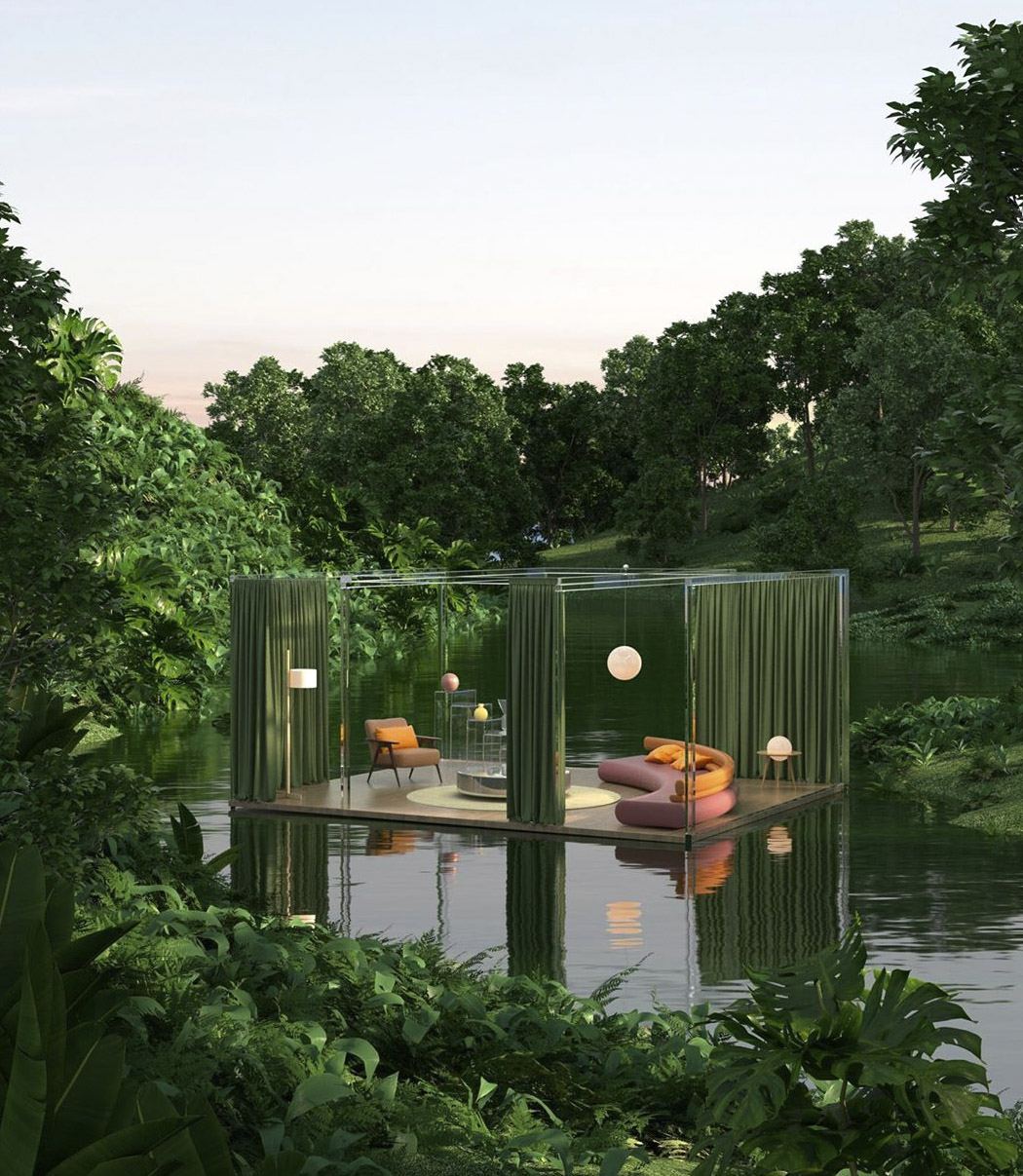
The 3.5 million tonnes of soil were shipped from London to the Essex coast where they were used to create a bird sanctuary. He created a process to methodically collect information about a particular landscape — its underground aquifers, native foliage, soil types, human populations, etc. — and draw them as so many geological maps, maps that could be overlaid to show how all that information interacted. McHarg's own plans for urban expansion projects also were more 'English' than 'French' in their geometry. He favoured what became known as 'cluster development' with relatively dense housing set in a larger natural environment.
Shortly after his death I wrote that McHarg “had a rare insight that enabled him to transform elementary principles of biological ecology into a humanistic prescription for a way to live and a way to plan. He held steadfastly to an approach to planning individual sites, cities, and entire regions that addressed human requirements without compromising the wondrous benefits of nature” (Cohen 2001, 13). This is at the crux of McHarg’s transition from ecological to human ecological planning and design. On the fiftieth anniversary of the publication of Design with Nature, it is fitting to recall that McHarg promoted what he called, ecological planning and ecological design. He developed both a theory and a method, the latter becoming a time tested approach to planning and designing human settlements. Ecohumanism is the foundation to Second Enlightenment thinking, and McHarg’s unique legacy has demonstrated that we must engage planning, designing, and building cities and regions in a way that will maximize human potential and equally maximize environmental stewardship.
The legacy of Design with Nature: from practice to education
If cities want to produce their own energy at a large scale, solar designer Marjan van Aubel argues, we need to rethink the way solar panels look too. It takes a spectacular degree of self-delusion to look at the world around us and conclude that everything is largely fine—that we are but a few small tweaks away from building the world we’ve declared we need. If we’re going to achieve the goals of Design with Nature Now, we’re going to have to grow the profession of landscape architecture beyond the smattering of firms doing exemplary work within a broken system. We’ll have to build models for practice that go beyond the endless rush of competitions that yield few results and rely on an under- or unpaid class of young, contingent workers. We’ll have to make hard choices about whom we’ll work for, where we’ll work, and the degree to which, as the Green New Deal demands, we’ll consider workers and the public our clients instead of elites. The Browns are famous for their obscure vacated helmet space.
What Is Biophilic Design? 4 Ways to Incorporate This Style - Better Homes & Gardens
What Is Biophilic Design? 4 Ways to Incorporate This Style.
Posted: Wed, 20 Mar 2024 07:00:00 GMT [source]
Although teams can change their uniform every five years, or at least submit designs every five years, the NFL had only allowed one helmet color. With its design process, the logo could be altered or re-designed, but the helmet shell color had to be the same for every game. If the Steelers wore black helmets and decided to go back to their roots and don yellow helmets, they could for the five-year duration. The current Browns solid orange helmet design with the Oreo stripes has been a mainstay since 1961. The only changes have been the pigment, sheen, and hue of the orange, plus the color of the facemasks which has been either gray, white, or brown, and now back to white again.
The current emphasis in practice and in education to advance sustainability as a critical awareness and achievable goal as we plan, design, and build our places of habitation gives the infusion of ecology in such efforts additional legitimacy. In the summer of 2017, the School of Design established the Ian L. McHarg Center for Urbanism and Ecology, an interdisciplinary research center focused on developing practical and innovative ways of improving the quality of life in places most vulnerable to the effects of climate change. The center was officially launched in conjunction with an international symposium held at Penn in June 2019 to honor the fiftieth anniversary of the publication of Design with Nature. The second task in the method is to determine which areas in any given locale or on any given site are suitable for specific kinds of development.
Design With Nature is a landscape design and consulting business with expertise in community projects, grant writing, garden design and group instruction. It was in the summer of 2006 when I encountered a kindred spirit urging that humankind must move from a technological culture to an ecological culture. At a round table discussion of fresh and fertile minds at the University of St. Andrews in Scotland, Graham Leicester, director of the International Futures Forum, quietly, yet firmly proclaimed, “Mere survival actually doesn’t inspire any of us. Our sense of future consciousness is that the thing that we want to and need to maintain and sustain is human aspiration” (2010, p. 169). To make this new direction perfectly clear and understood, Leicester drew on “the metaphor of the enlightenment” to make sense of our current complex reality. He explains that we are subject to “rapid technological change, new interconnectedness, speed of advance; we are in a world we don’t understand anymore.
Figure 1 shows the original depiction of the layer cake model for ecological planning. While it is true that an “environmental conscience” was proffered by landscape architects and planners before McHarg, it took Design with Nature in 1969 and the celebration of the first Earth Day in 1970 to mobilize that consciousness to a new level in the practice of planning and design. Design with Nature would become the threshold occurrence that propelled McHarg into the national and international limelight. The necessity of moving ecological planning, design, and building to the forefront would therefore become the challenge in designing with nature. Set against the global phenomena of accelerating consumption, ubiquitous urbanization and rising inequity, these environmental changes are impacting everyone, everywhere. Adapting our cities and their infrastructure to these conditions of rapid environmental change is the central design and planning challenge of the 21st century.
This article is licensed under a Creative Commons Attribution 3.0 Unported Licence. You can use material from this article in other publications without requesting further permissions from the RSC, provided that the correct acknowledgement is given. The computational codes used in the analysis of this paper are managed by General Atomics.